Never guess about a candidate again.
Everyone on your shortlist arrives with the recording, the transcript and the reasoning already attached. So when your hiring manager asks why this one and not that one, you have an answer.
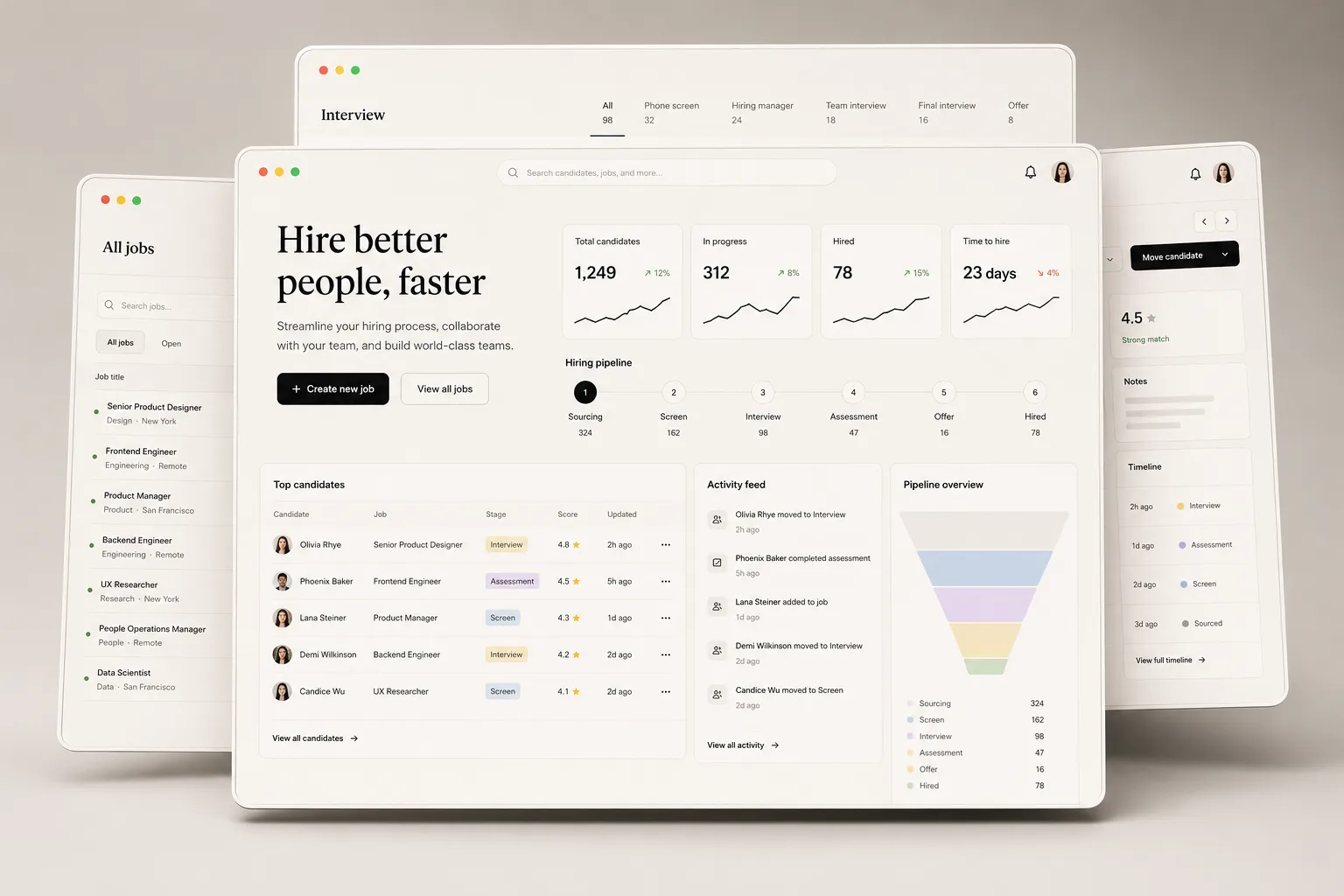
- 01SourceSource candidates from millions of profiles
- 02ScreenResumes read and candidates called, against the bar you set
- 03InterviewInterviews run by us or by your team, scored the same way
- 04DecideEvery decision traceable to what it came from
Getting the role up
Type it, paste it, or say it
Start with a blank page or with the brief already in your inbox. Either way you finish with a job post, the questions to screen on, and the bar everything afterwards gets measured against.
Talk it throughSARA asks what the role needs and writes it while you answer
Paste a briefDrop in what your hiring manager sent; gaps come back flagged
Fill the formAlready know the role? The description drafts itself around it

Where they come from
Look beyond the people who happened to apply
We go looking through public profiles and the work people have published, then read what we find against the role you actually wrote. Everything stays linked back to where it came from, so you can walk your hiring manager through a shortlist line by line.
Their historyWhere they've worked, and for how long
Their workPublic projects you can open and read yourself
The fitHow closely their stack matches the one you described
Passed overWhy we left them out, in as many words

Before you speak to anyone
Every resume assessed, every shortlist called
Every resume comes back with a written assessment against the role, so you can see the thinking rather than just a position in a list. Anyone who clears it gets a phone screen: the deal-breakers first, then notice period, pay and the practical details. You get it back scored, recorded and transcribed.
What's your notice period, and is there anything that could extend it?
Ninety days, contractual — I've flagged it with my manager, but it isn't negotiable below sixty.
Resume readScored on each requirement, with the reasoning written out
KnockoutsWork authorisation, location, must-have skills — asked upfront
Call scoresMarked on each thing you said mattered, quoting what they actually said
AvailabilityNotice period, expected pay, next steps — pulled out as fields
The recordRecording and transcript on every call

The interviews themselves
However the interview happens, it is scored the same way
Some interviews we run for you, whenever the candidate is free. Others you run yourself, or hand to someone outside your team. All of them are marked against the same things, so a debrief is a comparison instead of an argument between people who each remember the conversation differently.
The AI roundHow they handle an incident, and how they reason about systems
The panelYour team, judging against those same things
The write-upWhy each mark was given, in someone's own words

One bar, all the way down
Decide what good looks like once
Say what matters for this role and how much it matters, and that is what everything downstream marks against. The resume read, the phone screen, the interview and your own rounds are all scored on the same things, so nobody is quietly applying their own standard halfway through.
The roleSenior Backend Engineer, Platform
What to askIncident response, life on-call, distributed systems
What matters mostSystems depth, weighted heaviest, in every round after this

When there are thousands
Drop the whole pile in at once
Drag in every resume you have and watch them move through reading, calling and interviewing in one go. Nothing to split into batches, no queue to sit and watch.

The reading
Every one measured against the role you wrote.
The calls
Placed and written up without anyone dialling.
The interview
A full round, marked on the same things.
Take only what you need
Use one piece of it and ignore the rest
Nothing here is all-or-nothing. Use only the part you need — just the screening, or just the calls — set when it runs, and let the scheduling go straight to candidates.
One step at a time
- Resume screening on its own, nothing else runs
- Calling on its own, at dates and times you set
- Interviews for people you found somewhere else
Referrals, however they arrive
- Resume upload, single or in bulk
- An email address or a phone number
- A CSV of a whole referral batch
- Each one lands tied to the specific job
While you are doing something else
The pipeline keeps moving while you are elsewhere
Set your bar once. Strong candidates get booked, weak ones hear back, and every move shows up in Slack and your ATS as it happens. The only thing that lands on your desk is the call that genuinely needed you to make it.
Clearly strongBooked into the panel round without waiting on you
Clearly notTold kindly, and told why — nobody is left wondering
Somewhere in betweenSent to a recruiter, because that one needs a person
Everyone elseSees it move in Slack and your ATS, as it happens

Your call, not ours
Every default is yours to overrule
The outreach sequences work the day you sign up. Change one, start from a template, build your own from nothing, or have it drafted for you. Then set exactly how the calling behaves underneath.
Outreach flows
- Automated intro, sent immediately
- A network touch a couple of days later
- A manual recruiter call at an exact time
- Automated follow-up to close the loop
Call behaviour
- Retry count and the delay between attempts
- Reschedule windows candidates pick from
- Whether weekend contact is allowed
- The same call on screen instead of over the phone
Working with agencies
Your agencies, working where you can see them
Invite the agencies you already work with. They bring their own recruiters and look after their own people, they see the roles you hand them the moment those go live, and whoever they send is judged exactly like everyone else.
What they seeOnly the roles you hand them, the moment you publish
Who they areTheir own people, managed by them, not by you
What they sendJudged the same way your own candidates are

When someone asks why
Every decision has something behind it
No number on a candidate sits there on its own. Click any score and you land on the thing it came from — the resume, the recording, the write-up.
Resume
Read against the role, and still there when you want it
Call
Every word of it, alongside the recording itself
Interview
The marks given, and the reasoning written next to them
Decision
Who moved, when they moved, and what prompted it
Start with the role you need to fill next
About ten minutes to set up. Pay for what you use — no seats to buy, and nothing to sign.